Ever paused before typing “cringy” or “cringey”? You’re not alone — this spelling confuses even native speakers.
Many people search for “cringy or cringey” online because both versions look correct. Social media, memes, and articles use them interchangeably, making it hard to choose.
This blog will clear the confusion and give you a simple rule. You’ll learn which spelling to use for American English, British English, and global writing.
By the end, you’ll confidently use “cringy” or “cringey” without second-guessing. Let’s settle this once and for all.
Cringy or Cringey – Quick Answer
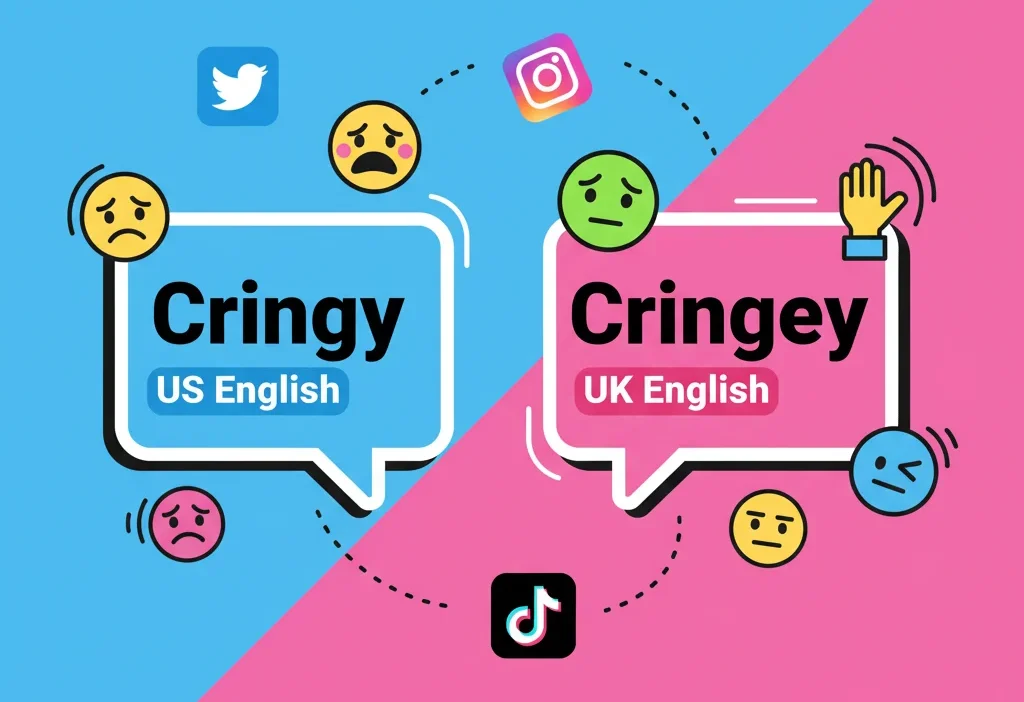
Both “cringy” and “cringey” are accepted spellings, but “cringey” (with an -ey) is more common in British English, while “cringy” (with just a -y) appears more in American English.
✅ Examples:
- That joke was so cringy. (American English)
- His behavior on the show was cringey. (British English)
Both mean the same thing — something awkward, embarrassing, or second-hand uncomfortable.
The Origin of “Cringy” / “Cringey”
The word comes from “cringe,” meaning to recoil or feel embarrassed. The adjective form “cringy” emerged in the 20th century, especially in informal speech and internet slang.
Adding “-y” or “-ey” to verbs or nouns is common in English (like spongy or gooey), and both endings are valid. Over time, the -ey version became more popular in the UK because it aligns with their spelling habits, while Americans simplified it to -y.
British English vs American English Spelling
British and American English often differ in how they form adjectives. For example:
| Word Type | British English | American English |
|---|---|---|
| Cozy | Cosy | Cozy |
| Grey | Grey | Gray |
| Cringy/Cringey | Cringey | Cringy |
In short:
- 🇬🇧 British English prefers cringey.
- 🇺🇸 American English prefers cringy.
Both are understandable worldwide, so your audience determines which to use.
Which Spelling Should You Use?
Here’s the simple rule:
- If you’re writing for an American audience, use “cringy.”
- If your readers are British or from Commonwealth countries (UK, Australia, Canada), use “cringey.”
- For global audiences or online writing, either is fine — just stay consistent throughout your text.
📝 Pro Tip: In SEO or brand writing, consistency matters more than which version you pick. Choose one and stick to it.
Common Mistakes with “Cringy” / “Cringey”
Here are some common errors and their corrections:
| Mistake | Correction |
|---|---|
| “Cringe-worthy” used as “cringy worthy” | Use “cringe-worthy” or “cringy” — not both together |
| Mixing both spellings in one document | Stick to one version |
| Using “cringe” as an adjective | Use “cringy” or “cringey” for adjectives |
“Cringy” / “Cringey” in Everyday Examples
You’ll see these words all over the internet and in pop culture:
- Emails: “That subject line sounds a bit cringy — maybe tone it down.”
- News: “Fans called the celebrity’s comments cringey on social media.”
- Social Media: “This TikTok trend is so cringy 😂”
- Formal Writing: Use sparingly — it’s considered informal slang, better suited for casual or creative contexts.
“Cringy” / “Cringey” – Google Trends & Usage Data
According to recent Google Trends data, “cringey” dominates searches in the UK, Australia, and New Zealand, while “cringy” leads in the United States, Canada, and the Philippines.
| Country | Most Popular Spelling | Usage Trend |
|---|---|---|
| United States | Cringy | 🔼 Increasing |
| United Kingdom | Cringey | 🔼 Increasing |
| Australia | Cringey | 🔼 Steady |
| Canada | Cringy | 🔼 Steady |
| Global | Both | 🔼 Equal use online |
This shows how language adapts — especially with social media shaping modern slang.
FAQs About “Cringy or Cringey”
1. Is “cringy” a real word?
Yes. “Cringy” is listed in major dictionaries like Merriam-Webster and means embarrassing or awkward.
2. Which spelling is more correct — cringy or cringey?
Both are correct, but cringy is favored in American English, and cringey in British English.
3. Can I use both forms interchangeably?
You can, but it’s better to stick to one version for consistency.
4. Is “cringy” formal?
No. It’s an informal term often used in casual writing, social media, or conversation.
5. What’s another word for cringy?
Embarrassing, awkward, cheesy, or uncomfortable are great alternatives.
6. Why does “cringey” have an extra ‘e’?
It aligns with British spelling patterns, where words ending with -ge often take an -ey ending when forming adjectives.
7. Is “cringe-worthy” the same as “cringy”?
They’re similar, but “cringe-worthy” is slightly more formal and widely accepted in written English.
Conclusion
Whether you spell it “cringy” or “cringey,” both versions capture that same feeling of secondhand embarrassment or awkwardness we all know too well.
The difference lies in geography and style — Americans drop the e, Brits keep it. What truly matters is consistency and clarity.
If your audience is international, either version works fine. Just remember: language evolves, and both spellings are now widely recognized.
So the next time you hesitate before typing, trust your regional instincts — and avoid anything too cringy (or cringey) while you’re at it!

Hi, I’m Ernest Hemingway, the author of GrammarNestly.com.
I’m a grammar expert and language enthusiast who loves making English simple and practical.
When I’m not writing about grammar, I enjoy reading, exploring new writing styles, and helping others improve their communication skills.


