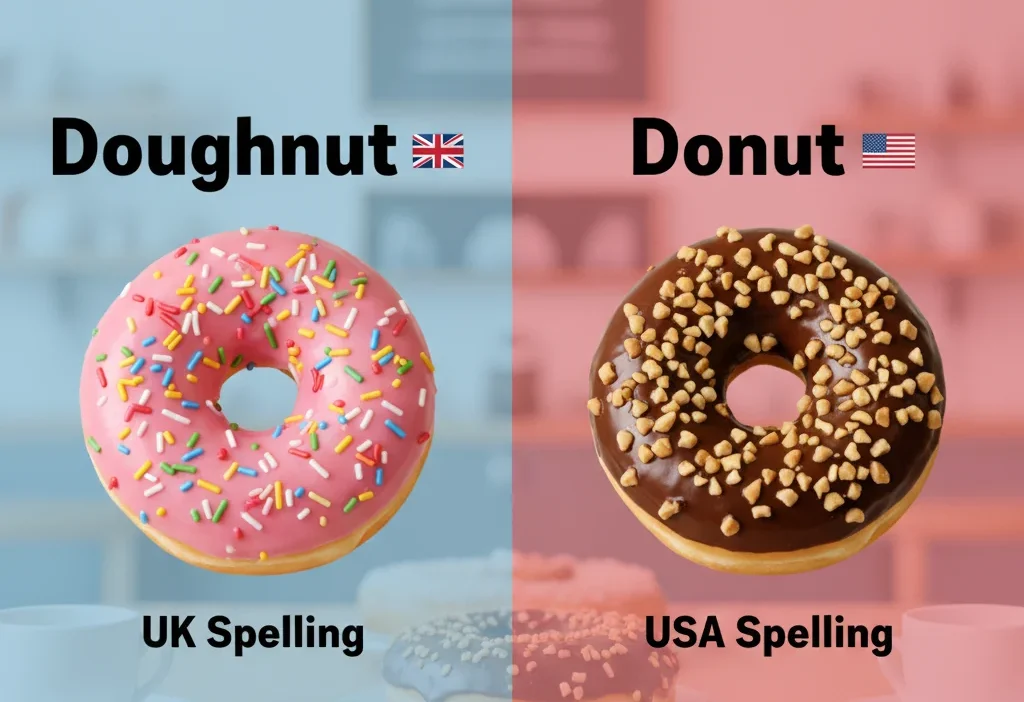
Have you ever paused over a menu wondering, “Donut or doughnut?” You’re not alone—this spelling puzzle confuses many.
People search this keyword to know which version is correct. They want to avoid mistakes in emails, blogs, and menus.
The difference seems small, but it matters for writing professionally. Choosing the right spelling can make your content clear and credible.
In this blog, we’ll explain the history, the US vs UK usage, and give practical advice. By the end, you’ll never hesitate between donut or doughnut again.
Donut or Doughnut – Quick Answer
The word “doughnut” is the traditional, original spelling. “Donut” is a shortened, simplified version mostly used in American English.
Examples:
- American menus: “Chocolate Donut”
- British writing: “Doughnut with sprinkles”
Both are correct, but context and location often determine which version you should use.
The Origin of Donut/Doughnut
The word “doughnut” dates back to the early 19th century. It comes from the combination of “dough” (the pastry mixture) and “nut” (referring to its small, round shape).
- Doughnut: First appeared in English literature in 1809.
- Donut: Shortened version popularized in the 20th century by American companies like Dunkin’ Donuts.
The spelling difference exists mainly because Americans often simplify words for marketing and convenience.
British English vs American English Spelling
In British English, the traditional “doughnut” is preferred.
In American English, “donut” has become more common, especially in informal contexts and branding.
| Feature | British English | American English |
|---|---|---|
| Spelling | Doughnut | Donut |
| Formal Writing | Doughnut | Doughnut/Donut |
| Menus/Branding | Doughnut | Donut |
| Common Usage | Traditional | Modern/Marketing |
Which Spelling Should You Use?
- If you’re writing in the US: Use “donut” for casual content, menus, or branding.
- If you’re writing in the UK/Commonwealth countries: Stick to “doughnut” for formal or informal contexts.
- Global audience: “Doughnut” is safer if unsure. It’s universally understood.
Common Mistakes with Donut/Doughnut
- Mixing spellings in one piece – e.g., “I love donut and doughnut.”
- Wrong pluralization – “donuts” or “doughnuts” are correct; avoid “donut’s.”
- Over-shortening – Using “donut” in formal essays or reports in UK English.
Tip: Always stick to one spelling per piece of writing.
Donut/Doughnut in Everyday Examples
- Emails: “Let’s grab a doughnut for the meeting.”
- News headlines: “Donut shops see surge in sales.”
- Social media: “Chocolate donut lovers, unite!”
- Formal writing: “Traditional doughnut recipes date back centuries.”
Consistency ensures clarity and professionalism.
Donut – Google Trends & Usage Data
Google Trends shows “donut” is more popular in the US, while “doughnut” dominates searches in the UK, Canada, and Australia.
- Peak interest: Around holidays like National Donut Day.
- Context: Food blogs, recipes, and coffee shop menus.
Comparison Table of Keyword Variations
| Variation | Popularity (US) | Popularity (UK) | Notes |
|---|---|---|---|
| Donut | High | Medium | Short, modern, American |
| Doughnut | Medium | High | Traditional, formal, global |
| Dough-nut | Very Low | Very Low | Rarely used, incorrect |
FAQs About Donut/Doughnut
1. Are donut and doughnut the same thing?
Yes, they refer to the same sweet, fried pastry. Spelling differs by region.
2. Which is more common in the US?
“Donut” is more common in everyday writing and branding.
3. Which is more common in the UK?
“Doughnut” is standard in the UK and Commonwealth countries.
4. Can I use donut in formal writing?
In American English, it’s acceptable. In British English, stick to “doughnut.”
5. What’s the plural form?
Both plurals are simply donuts or doughnuts.
6. Why do Americans prefer “donut”?
Shorter spellings became popular for marketing and ease of writing.
7. Is one spelling correct over the other?
Both are correct; context determines the best choice.
Conclusion
Whether you write “donut” or “doughnut”, understanding your audience is key. Use “donut” for casual, American English content, and “doughnut” for British or formal contexts.
Avoid mixing spellings, ensure proper plural forms, and consider your readers’ expectations. Remember, both words are widely recognized and accepted, so your choice reflects style, not correctness.
With this guide, you can confidently write menus, social media posts, emails, or articles without worrying about spelling errors.
Next time someone asks “donut or doughnut,” you’ll know exactly what to say—and why.

I’m Emma Collins, a grammar expert and author at Grammarnestly.com. I love helping readers master English with simple, practical grammar guides.
When I’m not writing, I enjoy reading, coffee, and exploring the beauty of language.