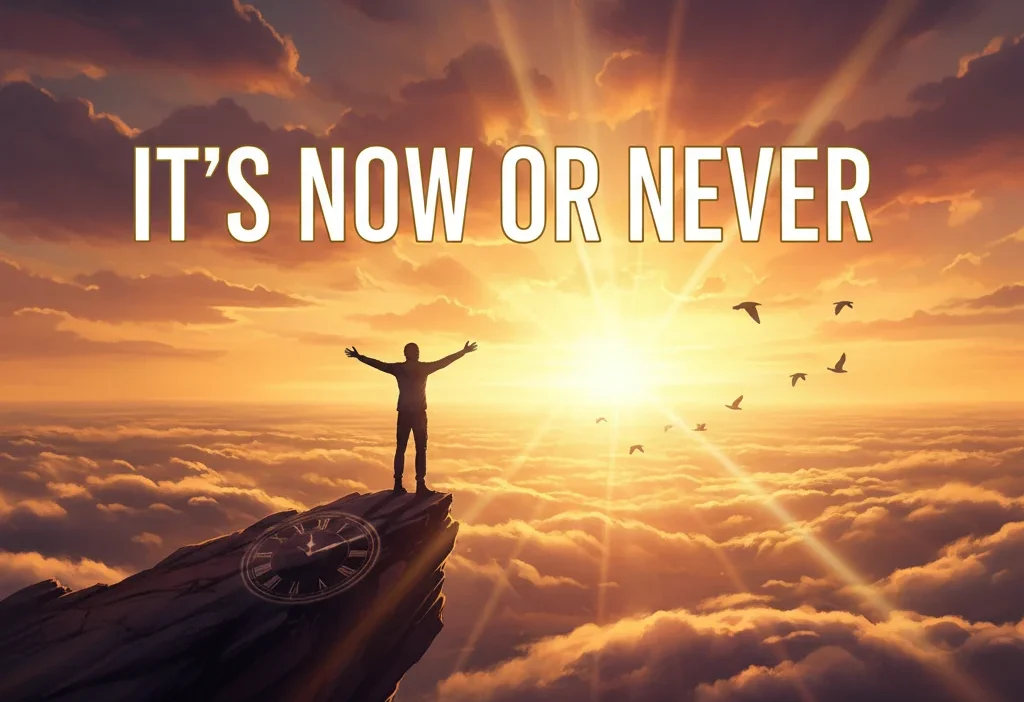
Have you ever faced a moment where you had to act fast? That’s exactly what “It’s Now or Never” means.
Many people search this keyword because they want to understand its meaning and correct usage. Some confuse it with similar motivational phrases.
This blog will explain the phrase clearly. You’ll learn how to use “It’s Now or Never” naturally in speech and writing.
We’ll cover its origin, examples, and cultural impact. By the end, you’ll feel confident using it anytime.
It’s Now or Never – Quick Answer
The phrase “It’s now or never” means you must act immediately, or you’ll miss the opportunity forever.
It’s used to motivate someone to take action when the timing is critical.
Examples:
- If I don’t take this job offer, it’s now or never.
- They knew it was now or never to save their friendship.
In short, it’s a phrase that pushes you toward bold, decisive action.
The Origin of “It’s Now or Never”
The expression “It’s now or never” dates back to the early 19th century, used to describe moments when delay meant failure.
However, it became globally famous through Elvis Presley’s 1960 hit song “It’s Now or Never,” which gave the phrase a romantic and emotional touch.
Over time, the phrase evolved into a universal motivational saying — used in speeches, sports, business, and personal growth contexts — symbolizing courage and seizing the moment.
British English vs American English Usage
The phrase “It’s now or never” is used the same way in both British and American English.
However, American speakers often use it in a motivational or business sense, while British speakers may use it more casually or humorously in everyday talk.
Examples:
- 🇺🇸 It’s now or never — let’s close this deal!
- 🇬🇧 It’s now or never, mate. Let’s just do it!
How to Use “It’s Now or Never” in Everyday Life
Here are some real-life examples of when you can use this phrase:
- Before a big decision: Should I propose today? It’s now or never.
- During motivation: You’ve trained hard — it’s now or never!
- In storytelling: The hero realized it was now or never to save the day.
It fits perfectly when you want to add drama, urgency, or inspiration to your speech or writing.
Cultural Impact of “It’s Now or Never”
This phrase has influenced music, film, and motivational culture for decades.
From Elvis Presley’s timeless ballad to movie dialogues and sports speeches, “It’s now or never” has become a symbol of taking action against fear and hesitation.
It’s often quoted in self-help books and motivational seminars as a reminder that hesitation can cost you your dream.
Fun fact: The Elvis song was adapted from the Italian classic “O Sole Mio”, which adds a passionate and emotional layer to its message.
Why “It’s Now or Never” Still Inspires People Today
In today’s fast-paced world, the phrase “It’s now or never” resonates more than ever.
It reminds us to stop overthinking and embrace opportunities before they disappear.
Whether you’re starting a business, confessing love, or chasing a dream — this phrase is your mental push to act with confidence and courage.
It’s a timeless call to action that transforms hesitation into progress.
Synonyms for “It’s Now or Never”
If you want to vary your expression, you can use:
- “Make your move.”
- “No time like the present.”
- “Seize the moment.”
- “Do it or lose it.”
- “Take your chance.”
These alternatives carry the same sense of urgency and action.
Conclusion
The phrase “It’s now or never” reminds us that some moments don’t come twice.
Whether in love, career, or courage, the words spark instant motivation — urging you to act boldly without hesitation.
Next time you face a big choice, remember: it’s not about waiting for the perfect moment, but making the moment perfect — because it’s now or never.

Hi, I’m Jason Carter, the author behind GrammarNestly.com.
I’m a grammar expert with a passion for helping readers understand the English language in a simple and practical way.
I love breaking down confusing grammar rules and turning them into easy, everyday lessons that anyone can follow.