Have you ever typed “make due or make do” and paused, unsure which one is correct? Don’t worry—you’re not alone.
I’ve seen this mistake countless times, and it can be confusing, especially if you’re just learning English or want to polish your grammar.
If you’re someone looking for make do or make due, this guide is for you.
I’ll break it down simply so you finally know the difference. By the end, every doubt will be cleared up.
Make Due or Make Do – Quick Answer
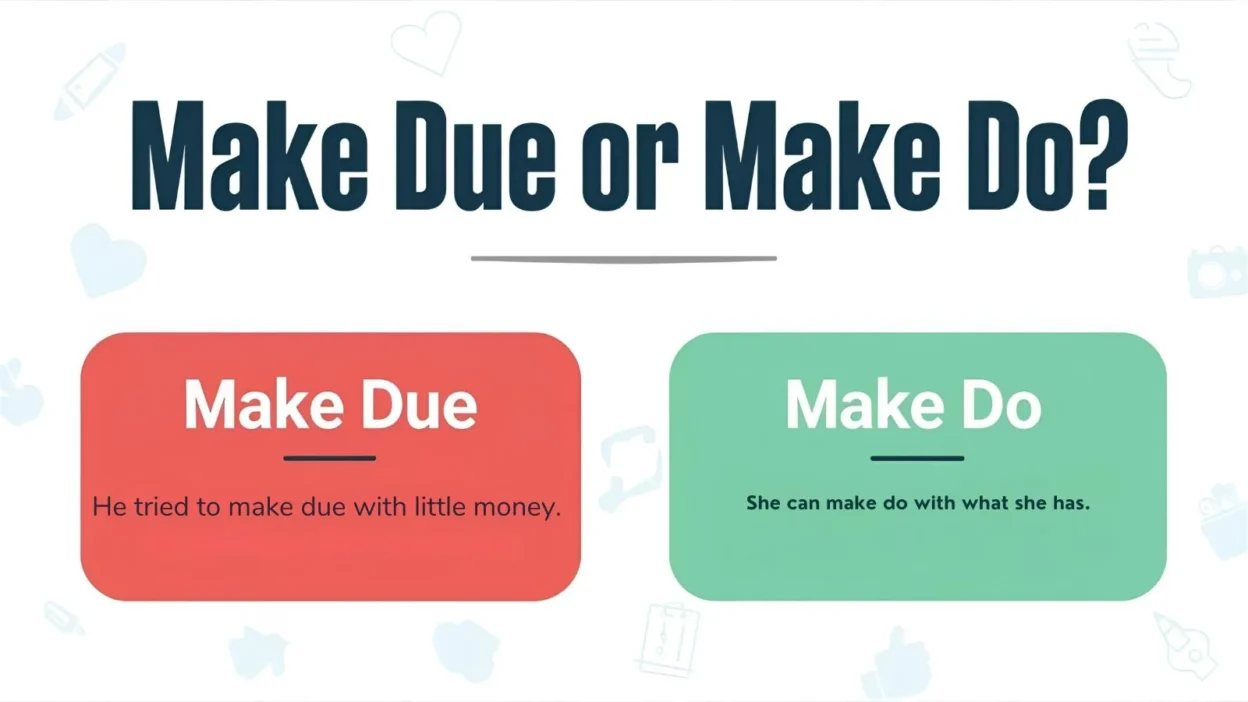
The correct phrase is make do, not make due.
Make do means to manage with limited resources or to get by without everything you want.
✅ Correct: We didn’t have enough chairs, so we had to make do with what we had.
❌ Incorrect: We had to make due with what we had.
In short: always write make do.
(Now we have clear answer that weather it is make do or make due).
The Origin of Make Do
The phrase make do comes from early 20th-century English. “Do” in this context means “to manage” or “to cope.” The expression is rooted in the idea of making a situation work, even if conditions aren’t perfect.
On the other hand, due means “owed” or “expected.” While make due looks logical, it has never been the correct form. The error comes from mishearing the phrase in speech and assuming “due” fits better in writing.
British English vs American English Spelling
The good news is that both British and American English agree: the only correct phrase is make do. Unlike words such as “colour” (UK) and “color” (US), there’s no regional spelling difference here.
| Version | Correct? | Example Sentence |
| Make do | ✅ Yes | We’ll make do with less money this month. |
| Make due | ❌ No | We’ll make due with less money this month. |
Which Spelling Should You Use?
- If you write for US readers: Always use make do.
- If you write for UK/Commonwealth readers: Always use make do.
- If you write globally: Stick to make do—it’s the only correct version in every English dialect.
The advice is simple: make do is universal.
Sneaked or Snuck? The Simple Grammar Rule You’ll Never Forget
Common Mistakes with Make Due or Make Do
Here are frequent mistakes people make:
- Mixing “make due” with deadlines – e.g., “The report will make due tomorrow”. Correct: “The report is due tomorrow.”
- Using “make due” in formal writing – e.g., “We must make due with limited staff”. Correct: “We must make do with limited staff.”
- Thinking it’s a British vs American issue – In reality, both use make do.
Make Do in Everyday Examples
- Email: We don’t have all the resources, but we’ll make do until next week.
- News report: Communities are forced to make do with limited water supplies.
- Social media post: Forgot my charger, but I’ll make do with low battery life.
- Formal writing: Organizations often make do with limited funding.
Drier or Dryer – Which Spelling Is Correct? with Examples in 2025
Make Due or Make Do – Google Trends & Usage Data
Google Trends shows that “make do” is far more common worldwide, while “make due” only appears as a frequent misspelling. Searches for “make due or make do” spike among students, professionals, and writers who want to avoid errors.
| Country | Most Used Form |
| United States | Make do |
| United Kingdom | Make do |
| Canada | Make do |
| Australia | Make do |
No matter where you are, make do is the standard.
FAQs:
1. Is it ever correct to say “make due”?
No, it’s always incorrect.
2. Why do people write “make due”?
Because “due” is a common word, many think it fits better—but it’s just a spelling mistake.
3. Can I use “make do” in formal writing?
Yes, it’s acceptable in both formal and informal contexts.
4. Does “make do” mean the same as “get by”?
Yes, both mean to manage with limited resources.
5. Is “make due” used in British English?
No, it’s wrong in British English too.
6. What’s the opposite of “make do”?
To have everything you need or to be fully equipped.
7. Is “make due” becoming accepted over time?
No, dictionaries and style guides confirm only make do is correct.
Conclusion
The phrase make due or make do causes confusion for many writers, but the answer is simple: only make do is correct.
It means to manage, cope, or get by with what you have. The mistaken version, make due, likely comes from mishearing the phrase, but it has never been standard English.
Both British and American English agree on this usage, so you never need to worry about regional differences. From professional emails to casual social media posts, make do works in every context.
If you remember just one rule, it’s this: always write make do—never make due. Doing so keeps your writing clear, professional, and grammatically correct.

I’m Emma Collins, a grammar expert and author at Grammarnestly.com. I love helping readers master English with simple, practical grammar guides.
When I’m not writing, I enjoy reading, coffee, and exploring the beauty of language.