Have you ever written “one in the same” and wondered if it’s correct? Many people struggle with this common phrase.
People search “One in the Same or One and the Same” to avoid embarrassing mistakes in emails, essays, and social media posts. They want a clear answer they can trust.
The difference may seem small, but it changes the meaning of your sentence. Using the correct phrase makes your writing precise and professional.
In this blog, we’ll explain the proper usage, common errors, and examples. By the end, you’ll confidently know which phrase to use.
One in the Same or One and the Same – Quick Answer
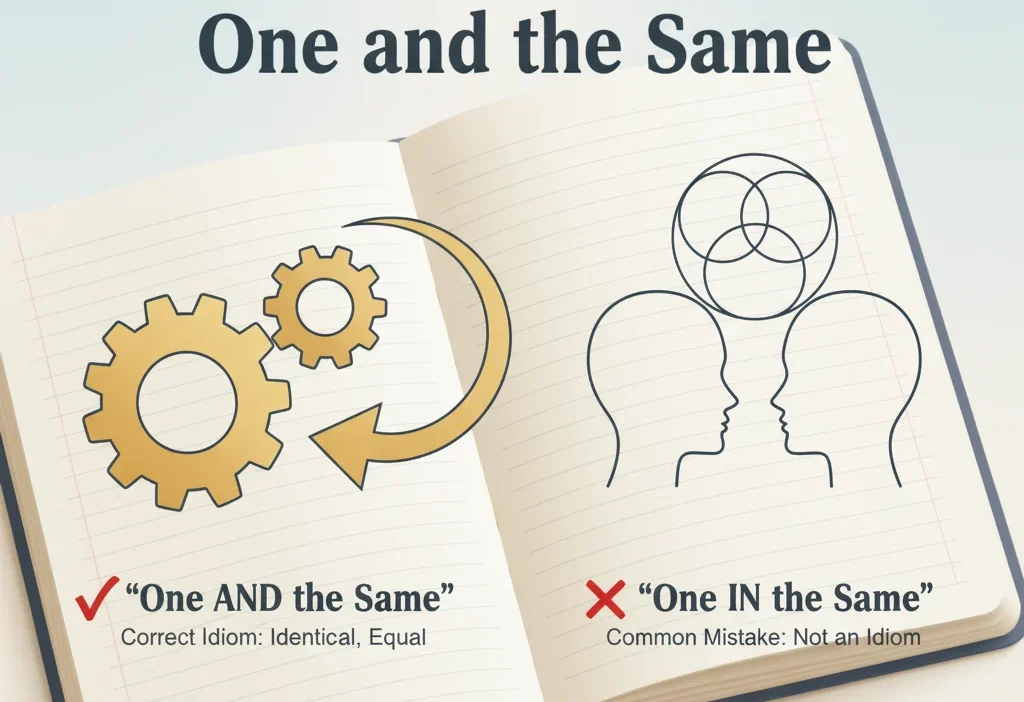
The correct phrase is “one and the same”.
Example:
- Correct: “The CEO and founder are one and the same person.”
- Incorrect: “The CEO and founder are one in the same person.”
The phrase means that two things or people are exactly identical or have the same identity. Saying “one in the same” is a common mishearing of the original phrase.
The Origin of One and the Same
The phrase “one and the same” dates back to the 1500s. It originates from legal and formal English, where precision was important.
Early texts show the phrase was used to clarify that two entities were exactly identical.
Spelling differences like “in” vs “and” exist mainly due to mishearing the phrase over time.
Spoken English often blends sounds, which can make “and” sound like “in,” leading to the popular but incorrect variant.
British English vs American English Spelling
Both British and American English use “one and the same”. The mistaken version “one in the same” is not correct in either dialect.
Comparison Table:
| Phrase | Correct? | Usage | Example |
|---|---|---|---|
| one and the same | ✅ Yes | US & UK | “The author and speaker are one and the same.” |
| one in the same | ❌ No | Incorrect | “The author and speaker are one in the same.” |
The rules for using this phrase are simple: always use “and”, not “in,” regardless of region.
Which Spelling Should You Use?
- US English: one and the same ✅
- UK/Commonwealth English: one and the same ✅
- Global writing: Stick with one and the same to avoid errors.
Avoid using “one in the same,” even in informal writing—it is widely considered incorrect.
Common Mistakes with One and the Same
- Using “in” instead of “and”
- ❌ “They are one in the same.”
- ✅ “They are one and the same.”
- Splitting the phrase incorrectly
- ❌ “They are one. And the same.”
- ✅ “They are one and the same.”
- Confusing with “the same thing”
- ❌ “The two are the same thing.” (slightly different meaning)
- ✅ “The two are one and the same.”
One and the Same in Everyday Examples
- Emails: “The project manager and team lead are one and the same.”
- News: “The accused and the suspect are one and the same individual.”
- Social Media: “This influencer and content creator are one and the same!”
- Formal Writing: “The poet and philosopher are one and the same in their approach.”
One and the Same – Google Trends & Usage Data
Search data shows people in the US, UK, Canada, and Australia frequently look up the phrase, mostly to confirm its correct spelling. Misused versions like “one in the same” spike in informal searches but remain less accepted in professional contexts.
Phrase Comparison Table
| Phrase Variation | Correct? | Notes |
|---|---|---|
| one and the same | ✅ Correct | Standard usage worldwide |
| one in the same | ❌ Incorrect | Common mishearing or typo |
| the same thing | ⚠️ Contextual | Related meaning but not identical |
| identical to | ✅ Correct | Alternative phrasing |
FAQs
1. Is “one in the same” correct?
No. The correct phrase is “one and the same.”
2. Can “one and the same” be used in casual writing?
Yes, it’s acceptable in both formal and informal contexts.
3. Why do people say “one in the same”?
It’s a common mishearing of the original phrase.
4. Is it used differently in American and British English?
No. Both dialects use “one and the same.”
5. Can I replace it with “the same thing”?
Not exactly. “One and the same” emphasizes identity; “the same thing” only suggests similarity.
6. How do I remember the correct phrase?
Think: “and” joins two identical entities—never “in.”
7. Is it formal or informal?
It’s formal but perfectly fine in everyday use.
Conclusion
The correct phrase is “one and the same”—not “one in the same.” Mishearing it is common, but using and ensures clarity and professionalism.
This phrase shows exact identity between two things. Whether in emails, social media, or formal writing, the correct form keeps your writing precise.
By learning its proper usage and avoiding common mistakes, you can confidently use one and the same in both US and UK English. Using the standard form shows attention to detail and strong language skills.

Hi, I’m Jason Carter, the author behind GrammarNestly.com.
I’m a grammar expert with a passion for helping readers understand the English language in a simple and practical way.
I love breaking down confusing grammar rules and turning them into easy, everyday lessons that anyone can follow.