Ever typed wellbeing and then wondered if it should actually be well-being? Don’t worry, you’re not alone—I’ve asked myself the same thing.
The keyword Wellbeing or Well-Being: What’s the Correct Spelling in 2026? keeps confusing students, writers, and even professionals who want their work to look polished.
I get how frustrating it feels to second-guess a simple word, and that’s exactly why I’m here to help. In this article, I’ll walk you through the spelling rules, the latest usage trends, and clear up the confusion once and for all.
Wellbeing or Well-Being – Quick Answer
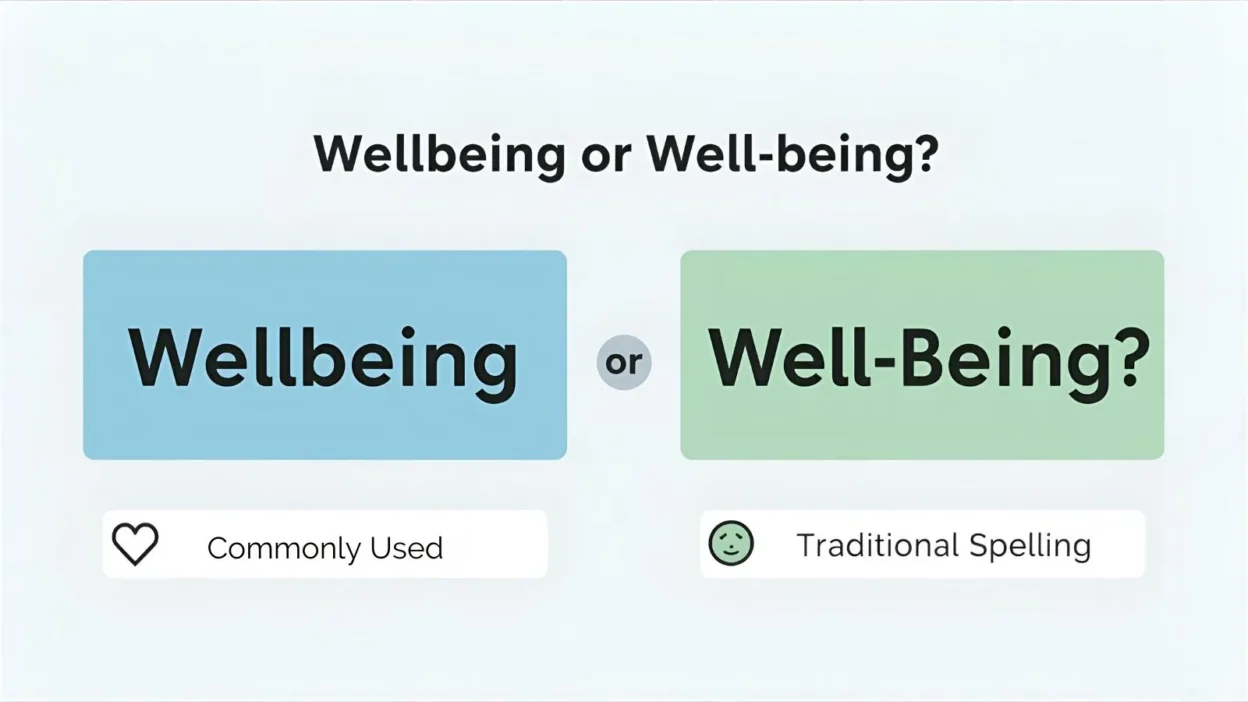
Both “wellbeing” and “well-being” are correct, but “well-being” with a hyphen is the more traditional and widely accepted spelling in formal English.
- Well-being (hyphenated): Standard in British English, academic writing, and dictionaries. Example: Mental well-being is essential for productivity.
- Wellbeing (one word): Increasingly common in modern usage, especially in online content and informal writing. Example: The app focuses on personal wellbeing.
In short: use well-being for formal contexts, but wellbeing is acceptable in everyday or casual settings.
The Origin of Wellbeing / Well-Being
The word comes from the combination of “well” (meaning healthy, good) and “being” (existence or state). Historically, it was always written with a hyphen as a compound noun—well-being.
Over time, as English evolved, many hyphenated words (like “email” from “e-mail”) dropped the hyphen.
This explains why “wellbeing” is now common in modern writing, especially online. The difference is not about meaning—it’s about style and tradition.
British English vs American English Spelling
Both British and American English accept “well-being,” but usage trends differ:
- British English: Prefers “well-being,” but “wellbeing” is gaining traction in government and media.
- American English: Still leans toward “well-being” in formal settings, though “wellbeing” is becoming common in wellness industries.
Comparison Table
| Region | Preferred Spelling | Example Sentence |
| British English | Well-being | The policy supports the well-being of staff. |
| American English | Well-being | Exercise is vital for mental well-being. |
| Informal/Modern | Wellbeing | Apps can improve your wellbeing. |
Which Spelling Should You Use?
- For US audiences: Stick with well-being in academic, business, and professional writing.
- For UK/Commonwealth audiences: Well-being is safest, though wellbeing is increasingly recognized.
- For global or casual audiences: Either spelling works, but pick one and stay consistent.
Pro tip: If you’re writing for SEO, include both versions once, then use your chosen spelling consistently.
Common Mistakes with Wellbeing / Well-Being
- ❌ Writing well being (with a space) → ✔ Correct: well-being or wellbeing.
- ❌ Using both versions in the same document → ✔ Pick one and stay consistent.
- ❌ Treating it as a verb → ✔ It’s always a noun. Example: Her well-being matters most.
Wellbeing / Well-Being in Everyday Examples
- Email: We care about your well-being and work-life balance.
- News: Government reports focus on children’s wellbeing.
- Social Media: 5 tips to boost your wellbeing today!
- Formal Writing: Employee well-being is a key factor in retention.
Wellbeing / Well-Being – Google Trends & Usage Data
Google Trends shows that:
- “Well-being” still leads in searches globally, especially in academic and professional contexts.
- “Wellbeing” has grown rapidly in wellness, healthcare, and lifestyle industries.
- UK usage is shifting faster toward “wellbeing” than the US.
Spelling Popularity Table
| Spelling | Global Popularity | Common Contexts |
| Well-being | Higher overall | Academic, formal, traditional use |
| Wellbeing | Growing fast | Online, health apps, casual writing |
FAQs
1. Is wellbeing one word or two?
It’s either one word (wellbeing) or hyphenated (well-being), but never two separate words.
2. Which spelling do dictionaries prefer?
Most major dictionaries list well-being as the main entry, with wellbeing as a variant.
3. Is wellbeing less formal than well-being?
Yes. Well-being is preferred in formal and academic writing. Wellbeing is more casual.
4. Can I use wellbeing in a business report?
Yes, but well-being is safer for a professional tone.
5. Why does the hyphen matter?
The hyphen shows it’s a compound noun. Dropping it reflects modern spelling trends.
6. Which version is better for SEO?
Use both once in your content, then stick with one consistently.
7. Do British universities accept “wellbeing”?
Yes, though well-being is still more common in academic work.
Conclusion
The debate over “wellbeing” vs “well-being” is less about meaning and more about style, tradition, and audience. Historically, the hyphenated form was the standard, and it remains the safer choice for formal, academic, and professional contexts.
However, the one-word version has gained popularity in modern writing, especially in wellness industries and online platforms.
If you’re writing for an international audience, consistency matters most. Use well-being when in doubt, but don’t worry—readers will understand either version.
Just avoid the mistake of writing “well being” as two words. Language evolves, and both spellings now have a place in English. Your choice depends on formality, audience, and personal style.

Hi, I’m Jason Carter, the author behind GrammarNestly.com.
I’m a grammar expert with a passion for helping readers understand the English language in a simple and practical way.
I love breaking down confusing grammar rules and turning them into easy, everyday lessons that anyone can follow.